Brunello Gianella · Motivational Intelligence

People aren't unmotivated. They're misread.

Motivational Intelligence reveals what underlies the relationship between motive, role, and system—and what drains people’s energy every day.

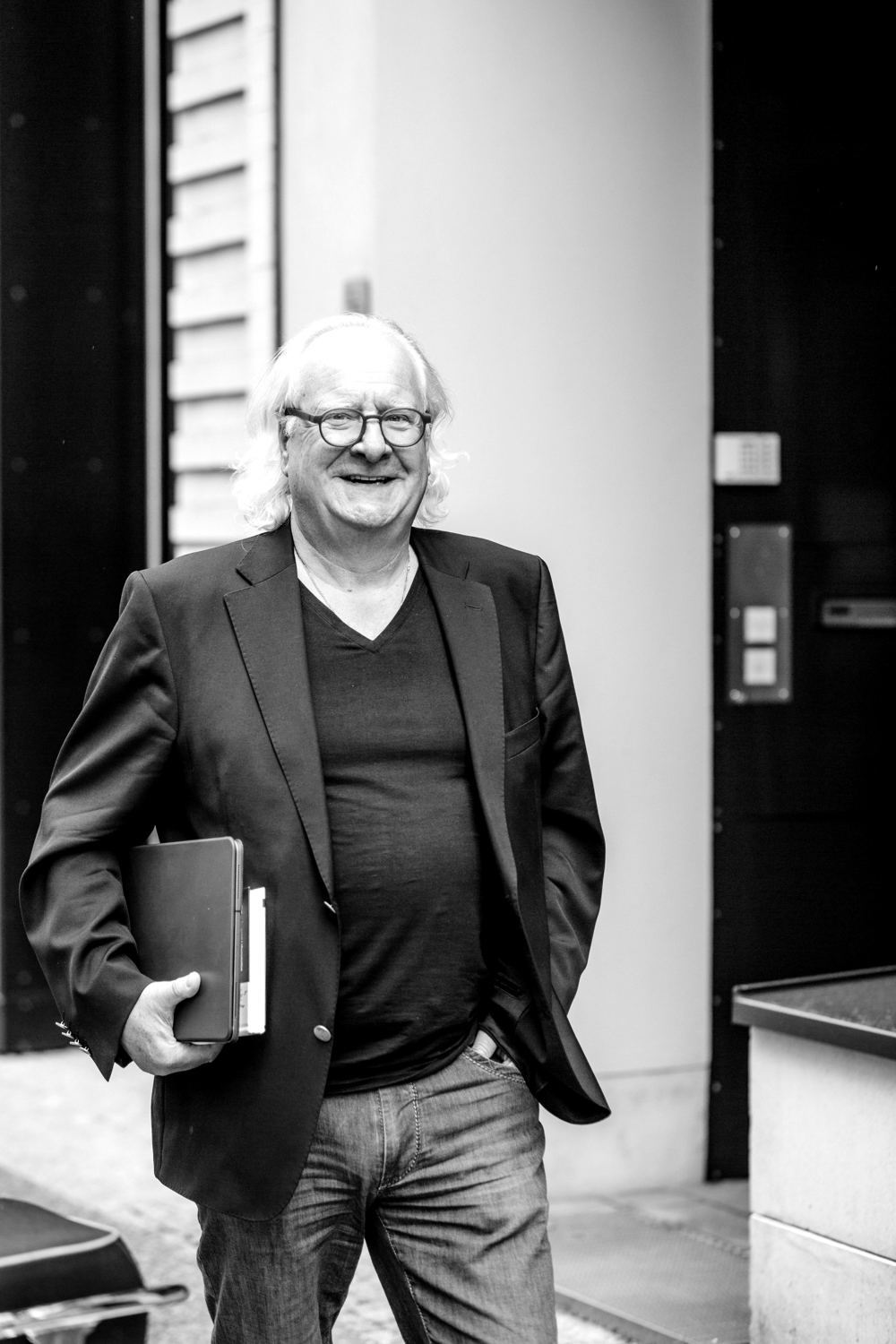
Brunello Gianella at the table, writing, with a tablet and books in front of him
01 / The Pattern

Everyone nods. No one moves.

A leadership retreat. The new strategy has been approved; no one objects. Six months later, half the work hasn't even begun.

The room was well moderated. The motives were not.

The usual answer
More communication, more engagement, more adaptation.

The more precise question
What motives does the role demand—and what motives does the person who is to play it have?

02 / The Interpretation

Behavior is visible. Motives are not.

Those who focus solely on behavior confuse the surface with its possible source. Motivational Intelligence is the ability to accurately interpret motives: not as a drive that simply needs to be kindled strongly enough, but as 16 life motives, each manifesting in its own unique way.

It is based on Prof. Steven Reiss's research on motivation and the Reiss Motivation Profile®.

Individual

It's the constellation that counts

The profile describes how strongly or weakly each of the 16 life motives is expressed in a person—compared to the norm. Not a type. An individual profile.

Equivalent

No pole is better

A strong Curiosity motive is no better than a weak one. What matters is the fit with the specific role.

Relatively stable

Not a mood

Life motives describe the inner goals and values that sustain a person over the years.

Typologies make people easier to understand. The Reiss Motivation Profile® makes individuality a topic of discussion.

03 / Stance

Within every person there is a place to which only they have access.

I call it ESSENTIA. Not the image others have of us. Not the role we play. But the source of our goals and values—that which doesn’t need to be negotiated to be valuable.

This place doesn't need to be created. It's already there. The profile provides coordinates. People provide meaning. The WIRK.RAUM provides context.

For a person, effect begins as intention. For a space, it begins as action.

No one sees my intention. The room experiences what I say, decide, and do—and what I fail to do. There is nothing trivial in between. In between lies leadership.

V = f(P, U)

According to Kurt Lewin, behavior is a function of the individual and the environment. WIRK.RAUM is therefore not a place that a manager controls. It is a relationship that all participants continuously help shape.

Unfiltered does not automatically mean authentic. At first, it is simply untranslated. The two poles of a life motive represent opposing, psychologically equivalent goals and values. Steven Reiss called the tendency to consider one’s own values superior Self-Hugging. From this, difference becomes judgment—and misunderstood intent becomes conflict.

Reading people is not value-free. It involves interpreting values. But it must be nonjudgmental.

04 / Three Scenes

The problem doesn't always lie with people.

Behavior provides observations, but not yet an explanation. Those who jump to conclusions too quickly turn a possible mismatch into a personal shortcoming.

Leadership

She often asks for feedback.

The Hasty Judgment
Not enough self-confidence.
The Motivational Hypothesis
A strong Acceptance motive can make validation and encouragement meaningful.
“I value validation and encouragement from others.” – Acceptance, strong
What's Changing
Feedback becomes a deliberately designed aspect of the work environment, rather than a means of correcting a weakness.

Team

Some want a plan; others just want to get started.

The Hasty Judgment
Some are rigid, others are chaotic.
The Motivational Hypothesis
With the Order motive, strong (predictability, organization) and weak (flexibility, spontaneity) collide.
What's Changing
The focus of negotiations is no longer on who is doing their job correctly, but rather on fixed points, areas of flexibility, and handoffs.

Strategy

Strategy calls for competition; the team fosters harmony.

The Hasty Judgment
Not ambitious enough. Another training session focused on performance.
The Motivational Hypothesis
A weak Vengeance motive can make peaceful coexistence and harmony meaningful.
What's Changing
We’ll determine what kind of competition the strategy really needs—and what it costs the team.

Each of these interpretations remains a hypothesis until the profile either supports or refutes it.

05 / How I Read

First, disconnect. Then, connect.

Motivational Intelligence begins where a quick grasp of human nature ends.

  1. Measure

    The Reiss Motivation Profile® shows how an individual’s 16 life motives compare to the norm. No typology, no labels: just coordinates.

  2. Distinguish

    The reading separates observable behavior from its possible motivational source. What looks the same need not arise from the same motive.

  3. Understand

    A number alone does not explain a person. Only through their biography, circumstances, and dialogue can we see what significance a particular trait has taken on in their actual life.

  4. Translate

    The reading connects motive, role, and WIRK.RAUM. It shows where energy flows, where adaptation requires effort, and where differences create friction.

Numbers prevent guesswork. Reading prevents judgment. Dialogue prevents presumption.

What it is not

  • A method that fixes people.
  • A test that categorizes people into types.
  • A coaching program with a fixed curriculum.

We don't start by asking, "What's wrong with this person?" We ask, "What haven't we understood yet?"

A reading doesn't tell you who you are. It shows you the perspective from which you view the world—and why others might see that same world in a completely different way.

If you can read people, you no longer have to make them up.

Brunello Gianella, laughing, with a tablet under his arm

06 / Motivational Intelligence Advocate · Mentor

I don't give advice. I read what needs to be understood before giving advice.

My name is Brunello Gianella. For more than forty years, I worked on change management projects with CEOs, owners, and leadership teams—most recently under the name CEO-CODE®. Then I stepped away from my role as a consultant. Today, I am a mentor, not a coach.

I learned the Reiss Motivation Profile® from Prof. Steven Reiss in Columbus, Ohio—directly from the founder of the method. I’ve been working with it for over twenty years. Motivational Intelligence is the result of combining the two: a more precise interpretation of motives, roles, and systems.

I live and work in the canton of Schwyz. Through WIRK.RAUM SCHULE, I bring this way of reading people into education. My book (in German): Wenn Turnschuhe nichts bringen.

Experience gained from working on projects for

  • Shell
  • Ford
  • Hilti
  • Swiss Life
  • Mazda
  • Jaguar
  • Roche
  • Nestlé
  • Land Rover
  • Zuger Kantonalbank
“His professionalism, creativity, and boundless joy of discovery make every project unique.”
Ursula Wagner, Ph.D. · CEO, Coaching Center Berlin
“In-depth thought leadership and the ability to communicate complex concepts very clearly.”
Evan Leybourn · Business Agility Institute
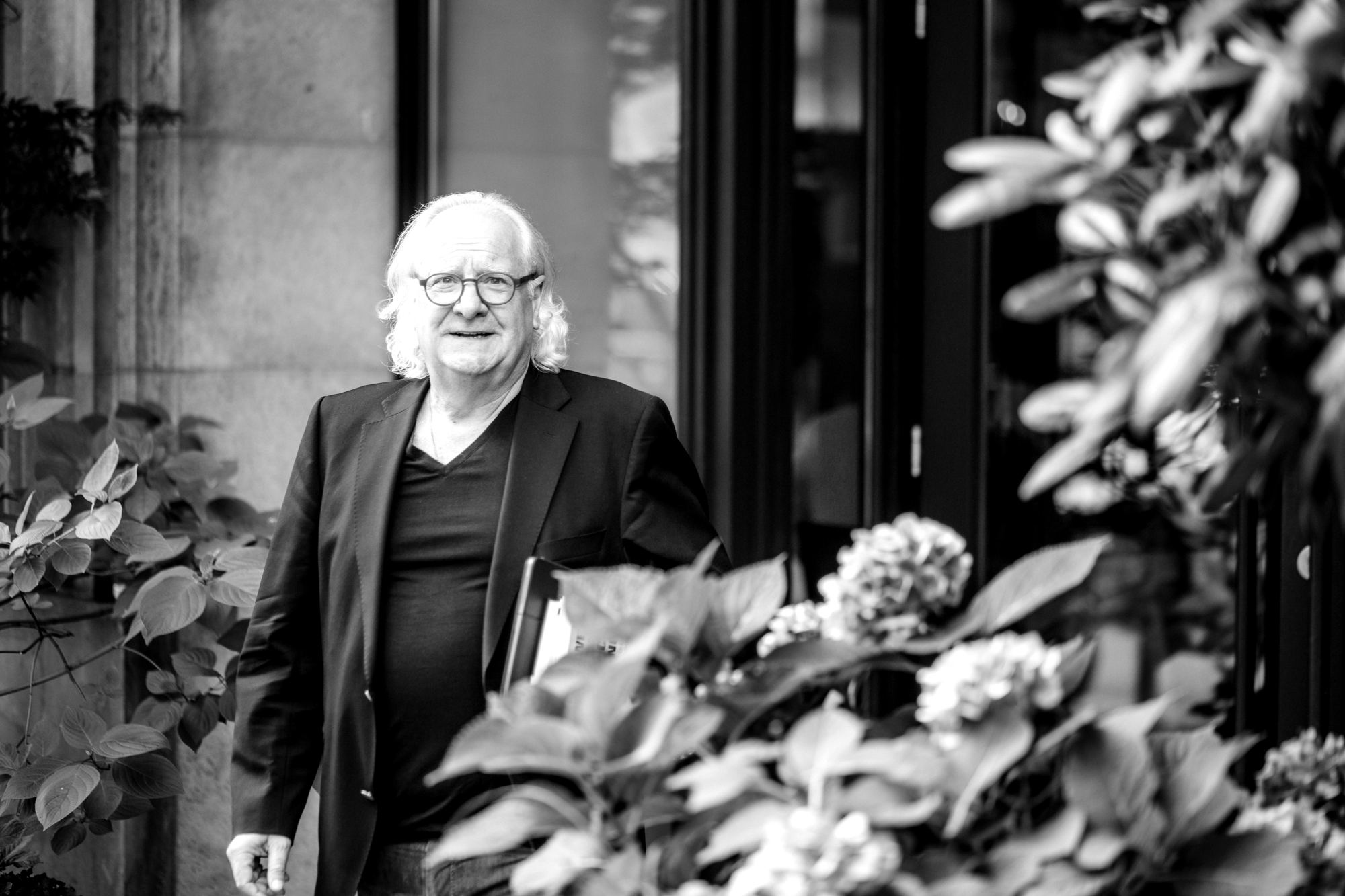
Brunello Gianella in front of a house entrance, with hydrangeas in the foreground
07 / In Conversation

Thoughts don't get any better just because you send them out.

But because others are allowed to disagree with them.

I post daily on LinkedIn: about motivation, leadership, work, and the systems that are too quick to label people as the problem. And I respond. For me, content isn’t just a broadcast channel—it’s the start of a conversation.

Join the conversation on LinkedIn →

08 / Passing it on

I pass it on when it holds.

I no longer sell programs, and I no longer write invoices.

I pass on what I have: experience, tacit knowledge, and insights gained from forty years of working with people in leadership roles. It’s about the person, the relationship, the issue, and the challenge. I’m the one who decides whether that’s the case.

In private

A question, read carefully

A leadership decision, a role, a conflict that won't go away. We'll explore the motivations at play—yours and those of others.

Over Time

Mentoring

For people who work on a question over a longer period: roles, staffing, culture. No curriculum. Conversations when they are needed.

It always starts the same way: with an espresso.

09 / Virtual Espresso

Thirty minutes. An espresso. One question.

No sales pitch. You share an observation from your everyday life—and I'll help you explore what might be behind it.